

If you have purchased a fire door for your open fire, or you are considering one, an important question is how it should be installed. Fitting is more involved than a typical DIY task because the fireplace, chimney, ventilation and any connected back boiler must all work safely together.
This guide explains what a professional installation normally involves, what should be checked before work begins and how to find a suitably qualified installer in Northern Ireland or the Republic of Ireland.
Home Centre Direct supplies fire doors for open fires across NI and ROI. We do not provide an installation service. This guide will help you understand what to discuss with an installer after delivery.
What does fitting a fire door involve?

A fire door must be installed in accordance with its current manufacturer instructions and the building regulations applying to the property. Incorrect installation can affect combustion, chimney draw and the movement of smoke and combustion gases.
Before fitting begins, the installer should confirm that the fireplace construction, fireback, throat-forming lintel, hearth, chimney and ventilation are suitable for the specific fire-door model. The dimensions and required clearances must be checked against the manufacturer's current instructions rather than estimated from the visible fireplace surround.
A professional installation will normally include:
- inspecting the chimney and flue and arranging sweeping where required;
- checking the fireplace opening, fireback, lintel and hearth;
- confirming all required clearances from combustible materials;
- checking that the room has adequate permanent ventilation;
- confirming compatibility with any existing back boiler;
- fixing and sealing the frame in accordance with the manufacturer instructions;
- fitting all supplied components in their specified positions; and
- checking chimney draw and safe operation before the appliance is used.
The exact method, fixings and clearances depend on the product and fireplace. Customers should not use this overview as a substitute for the manufacturer instructions or professional assessment.

Why should a trained, competent person complete the fitting?
A fire door is installed next to a live solid-fuel fire and becomes extremely hot during use. The installation can also change airflow through the fireplace and chimney. A poor seal, inadequate ventilation or unsuitable chimney can allow smoke or carbon monoxide to enter the room.
The risk is greater when a back boiler is present because changing combustion or chimney draw may also affect hot-water and heating performance. The installer needs to assess the complete system, not only the door and visible fireplace opening.
Applicable building regulations differ between Northern Ireland and the Republic of Ireland. In Northern Ireland, customers should confirm approval requirements with their local council's Building Control department. In the Republic of Ireland, the installation should comply with the applicable Building Regulations, including Technical Guidance Document J for heat-producing appliances.
Does Home Centre Direct install fire doors?
No. Home Centre Direct supplies fire doors for open fires across Northern Ireland and the Republic of Ireland, but we do not provide an installation service.
Installation requires an on-site assessment of the fireplace, chimney, hearth, ventilation and any connected heating equipment. These conditions cannot be assessed remotely.
If you are unsure whether this product suits your fireplace, read our fire door buying guide and ask a suitably qualified solid-fuel heating installer to confirm compatibility before ordering.
What should a qualified installer check?

Choose a trained and competent installer with appropriate experience in solid-fuel fires, chimneys and back-boiler systems. Before and during installation, they should assess:
- Chimney and flue: whether they are clear, sound and suitable for the intended fuel and installation.
- Fireplace opening and fireback: whether the dimensions, construction and condition are compatible with the fire door.
- Hearth: whether its materials, dimensions and condition meet the applicable requirements.
- Clearances: whether the manufacturer-specified distances from combustible materials can be maintained.
- Ventilation: whether the room has adequate permanent air supply for safe combustion.
- Back boiler: whether the fire door is compatible with the boiler and will not adversely affect its operation.
- Frame fixing and sealing: whether the complete assembly can be secured and sealed as specified by the manufacturer.
- Operation: whether chimney draw, airflow controls and the complete installation operate safely before handover.
Ask the installer to explain the controls, approved fuels, maintenance requirements and warning signs that mean the fire should not be used.
Fire-door problems that require investigation
Smoke, persistent fumes, poor chimney draw or unusually rapid soot accumulation should not automatically be treated as normal. Stop using the fire, ventilate the room if necessary and ask a competent professional to investigate.
Smoke enters the room in windy weather. Wind, surrounding buildings, trees and chimney termination can affect draw. An installer or chimney specialist should inspect the property and identify an appropriate solution. Do not assume that adding a particular cowl will be suitable without professional assessment.
The fire is difficult to establish. A cold, damp or obstructed flue, insufficient ventilation, unsuitable fuel or incorrect control settings can all affect combustion. The underlying cause should be checked before continued use.
There is a smell or visible fumes. Follow the manufacturer's commissioning instructions. If fumes are persistent, excessive or accompanied by smoke or a carbon-monoxide alarm, stop using the fire, ventilate the property, leave the affected area and obtain professional assistance.
The glass becomes heavily sooted. Possible causes include unsuitable or damp fuel, insufficient airflow, poor chimney draw or incorrect operation. Follow the manufacturer instructions and ask the installer for advice if the problem continues.
How do you control a fire door after installation?

Fire doors may include separate controls for combustion air and an airwash system. Their positions and recommended settings vary by model and fuel.
Use only the fuels approved for the product and follow its current operating instructions when lighting the fire or adjusting airflow. Before handover, ask the installer to demonstrate the controls and explain the correct starting and operating settings.
Never leave a burning fire unattended. Keep combustible materials away from the fireplace and maintain working carbon-monoxide and smoke alarms as required for the property.
Can a fire door make an open fire work like a stove?
No. A compatible fire door may offer greater control over airflow and provide an additional barrier against sparks and embers, but it does not turn an open fireplace into a sealed stove. Actual performance depends on the fireplace, chimney, ventilation, fuel and installation.
A stove is a purpose-built combustion appliance and may require alterations to the chimney, flue and fireplace. It is a different installation with its own product specifications and regulatory requirements.
If you are considering a stove instead, browse our room heater stoves range. If a fire door may be suitable, the fire door product page contains its dimensions and product information.
Looking for fire-door installation instructions?
Use the current manufacturer instructions supplied with the product. Give the complete instructions and all supplied components to the installer before work begins.
Online videos can provide a general overview, but they cannot establish whether a particular fireplace, chimney, hearth, ventilation system or back boiler is suitable. They should not replace the product instructions or an on-site professional assessment.
Frequently asked questions
Does Home Centre Direct install fire doors?
No. Home Centre Direct supplies fire doors across Northern Ireland and the Republic of Ireland but does not provide an installation service. Installation should be completed by a trained and competent person in accordance with the manufacturer instructions and applicable building regulations.
How much does professional fitting cost?
Costs vary according to location, fireplace condition, chimney work, ventilation and back-boiler compatibility. Ask the installer to inspect the property and provide a written quotation. For current product pricing, see our fire door product page.
Can I fit a fire door myself?
We do not recommend DIY installation. Fitting affects combustion, chimney draw, ventilation and clearances from combustible materials. The work should be completed by a trained and competent person following the current manufacturer instructions and applicable building regulations.
Why does my fire door smoke in windy weather?
Wind and nearby buildings or trees can affect chimney draw, but other faults may produce similar symptoms. Stop using the fire if smoke enters the room and ask a competent installer or chimney specialist to investigate.
Is it normal for a new fire door to smell when first used?
Some products may produce an odour while their finish cures, as described in the manufacturer instructions. Ventilate the room as directed. If the smell is excessive, fumes persist, smoke enters the room or a carbon-monoxide alarm activates, stop using the fire and obtain professional assistance.
What size fireplace opening does this fire door require?
Requirements must be checked against the current product specifications and manufacturer instructions. Measure the opening carefully and ask an installer to confirm compatibility, especially when the fireplace is old, irregular or connected to a back boiler. See our fire door buying guide for more information.
Do you deliver fire doors to Northern Ireland?
Yes. Home Centre Direct delivers to locations across Northern Ireland, subject to the product and delivery address. See our shipping policy for current details.
Do you deliver fire doors to the Republic of Ireland?
Yes. Home Centre Direct delivers to locations across the Republic of Ireland, subject to the product and delivery address. See our Ireland shipping policy for current delivery and customs information.
Shop fire doors for open fires at Home Centre Direct
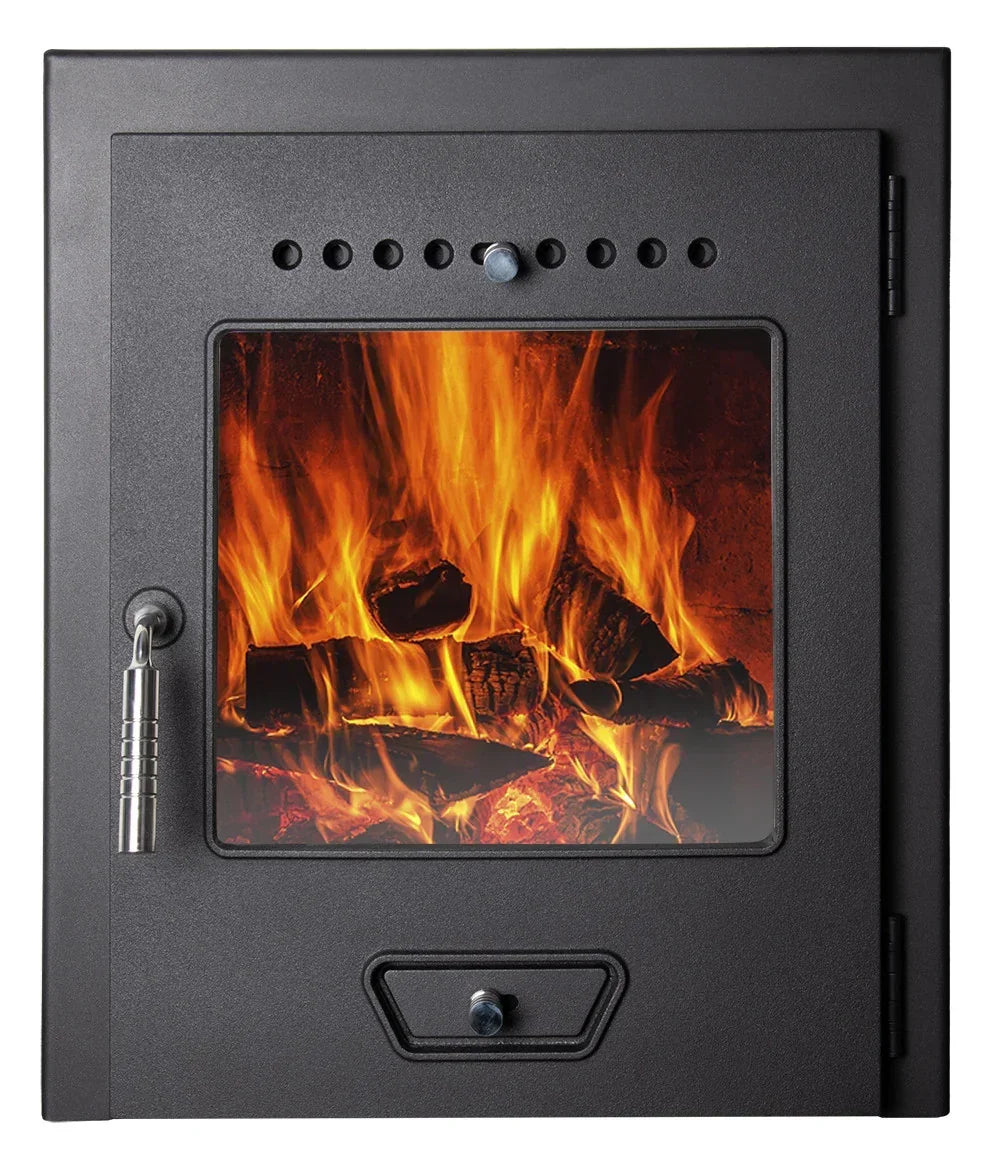
Review the dimensions and product information on our fire door for open fires product page, then ask a suitably qualified installer to confirm that it is appropriate for your fireplace.
Considering a stove instead? View our room heater stoves range to compare your options.