

Most people spend weeks choosing paint colours and flooring. Then they pick internal doors in ten minutes and wonder why the rooms never quite come together.
The right internal door does more than fill a frame. It controls noise between rooms, sets the style for your entire home, and determines how every room feels when you walk through it. Choose well and every room clicks into place. Choose poorly, and no amount of furniture fixes it.
This guide covers how to choose internal doors for every room in your home across Northern Ireland (NI) and the Republic of Ireland (ROI): style, core material, finish, size, and hardware, so you buy with confidence and get it right first time.
What door style suits your home's interior design?
Style is the first decision, and it anchors every choice that follows. Internal doors come in four main styles, each suited to a different type of home and interior.
Shaker doors
Shaker doors feature a flat recessed central panel framed by a clean rectangular border. They sit comfortably in both modern and traditional interiors, which makes them the most versatile choice available. A shaker door in oak looks natural in a period terraced house in Belfast or a farmhouse in County Clare. The same door in white primed works just as well in a contemporary new build in Dublin or Lisburn.
If you want one style that works throughout your entire home, Shaker is the safest and most rewarding choice.
Flush doors
Flush doors have a completely flat, smooth surface on both sides. Their clean lines suit minimalist, Scandi, and contemporary interiors and pair beautifully with matt black or satin chrome hardware. They are the most affordable internal door style and the easiest to paint if you want a colour other than white.
Flush doors work best in modern new builds and open-plan homes where simplicity and continuity of line matter most.
Glazed doors
Glazed doors include one or more glass panels. They borrow natural light from brighter rooms and pass it into darker ones. A hallway leading into a south-facing living room, for example, or a kitchen that feeds light through to a utility room. Clear glass creates an open, connected feel. Frosted glass gives you the light without sacrificing privacy.
Glazed doors suit hallways, living rooms, and kitchen doorways where bringing light through is a priority.
Panel doors
Panel doors use raised or moulded panels arranged in two, four, or six configurations. They carry a more traditional, formal character and suit period properties, older terraces, and homes where warmth and craft detail matter. They pair naturally with antique brass or satin chrome hardware and oak or walnut finishes.
Which room needs which door? A room-by-room guide
Hallway
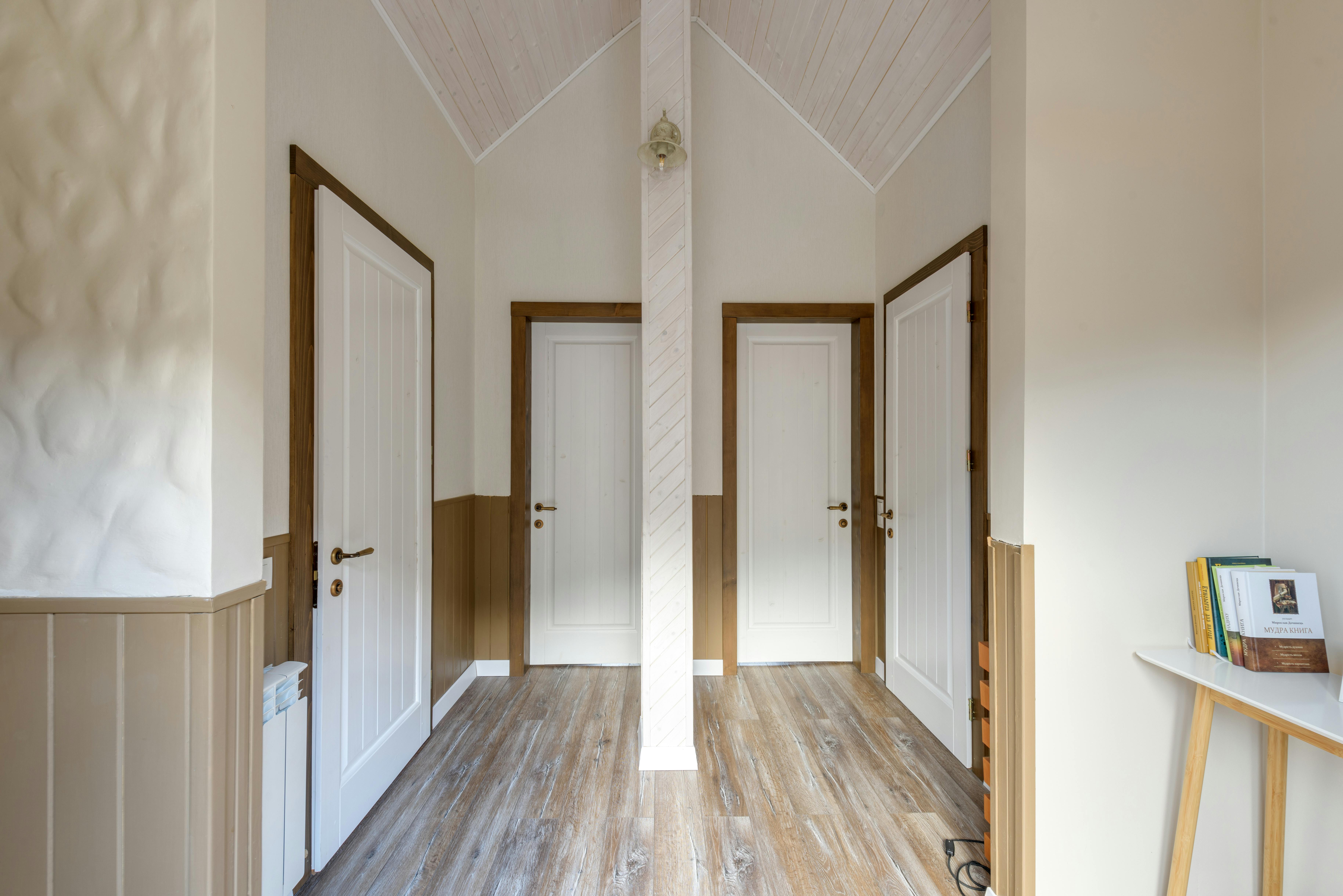
Your hallway door takes the most punishment of any door in the house. It opens and closes dozens of times a day, catches school bags, handles, and coat sleeves, and sets the first impression of your home's interior. Choose a solid-core door here without exception. A glazed shaker in the hallway is one of the most popular choices in new builds across Belfast, Derry/Londonderry, and Dublin right now. It lets natural light flood through without opening up the space entirely.
Living room
The living room door is a design statement. It is one of the most visible doors in the house and carries the weight of your interior style. A shaker or panel door in oak veneer adds warmth and natural texture that works beautifully with timber floors, neutral walls, and matt black hardware. If your living room is at the end of a darker hallway, a glazed panel here transforms the feel of the whole ground floor.
Bedroom
Bedrooms need privacy and sound control above almost everything else. A solid-core door blocks far more noise than a hollow core. The difference between hearing your teenager's music clearly and hearing it as a faint murmur. Choose a solid-core flush or shaker door here, and fit it with a lock. A white-primed flush door in a bedroom is clean and simple and lets the room's styling take centre stage.
Bathroom and en-suite
Bathrooms need a door that handles moisture without warping or swelling. Choose a solid-core door with a moisture-resistant finish: white primed and then painted with a satinwood or eggshell finish is the proven combination. Always fit a privacy lock on the bathroom door. If your bathroom is internal with no window, a frosted glazed door pulls natural light in from the hallway while keeping privacy completely intact.
Kitchen
If your kitchen has a door rather than an open archway, noise and odour control matter. A solid-core door here keeps cooking smells where they belong and reduces the sound of dishwashers, extractors, and appliances travelling into the living space. A glazed door between the kitchen and dining area keeps the spaces visually connected while giving you the option to close off the kitchen when needed.
Home office or study
Remote working has made this the most upgraded room in homes across Galway, Limerick, Newry, and Armagh over the last few years. A solid-core door on your home office is essential. It makes video calls dramatically quieter and creates a genuine psychological separation between work and home. Fit a standard lever latch rather than a privacy lock unless you specifically need one.
Hollow core vs. solid core: which do you need?
This is the decision most buyers underestimate and the one that affects how your doors perform every single day.
Hollow core doors have a lightweight honeycomb structure inside a thin timber or MDF frame. They are the most affordable option and work perfectly well in rooms where noise control and durability are not priorities: storage cupboards, utility rooms, and loft hatches. They are lighter to hang and easier to trim if your frame is slightly non-standard.
Solid-core doors are filled with a dense composite or engineered wood core. They are noticeably heavier, substantially better at blocking sound, and far more resistant to dents, warping, and daily wear. Hollow core doors typically achieve a Sound Transmission Class (STC) rating of 20 to 25, meaning normal speech passes through easily. Solid-core doors reach STC 30 to 35, reducing audible speech to a muffled sound at most.
The practical rule: use solid core for every room where people sleep, work, or need privacy. Use hollow core only for low-traffic storage spaces. If your budget allows one upgrade, put solid-core doors on every bedroom and bathroom first.
Which finish works best: oak veneer or white primed?
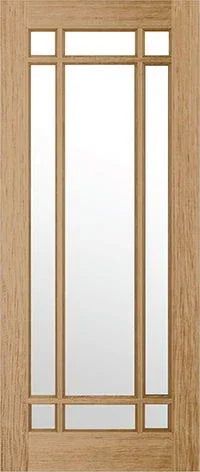
The two dominant finishes across homes in Northern Ireland and the Republic of Ireland are oak veneer and white primed. Both are excellent. The right one depends entirely on your interior style and how much flexibility you want.
Oak veneer
Oak veneer doors carry a warm, natural timber appearance that works in both traditional and contemporary homes. Oak pairs beautifully with matt black handles, exposed timber floors, and neutral wall colours. It suits period properties in Cork, Kilkenny, and Derry/Londonderry as naturally as it does modern detached homes in Antrim and Waterford.
Oak veneer is a prefinished option. It arrives ready to hang with no painting or finishing required. This makes it the fastest door to fit on a renovation timeline.
White primed
White primed doors arrive with a smooth base coat ready to paint in any colour you choose. Crisp white is the most popular choice across new builds in Dublin, Belfast, and Galway; it brightens rooms, bounces light around, and creates a clean, open feel throughout the home. But white primed also gives you the freedom to go bold: sage green, navy, or charcoal all look exceptional on a well-prepared shaker door.
If you want full creative control over your interiors now or in the future, white primed is the more flexible investment.
The consistency rule
Whichever finish you choose, use it throughout your home. Oak doors on the ground floor and white-primed doors upstairs look unfinished and reduce the sense of cohesion that makes a well-designed home feel intentional. Pick one finish per home and carry it through every room.
What are the standard internal door sizes in NI and ROI?
Getting the size right before you order saves significant time and cost. Standard internal door sizes across homes in Northern Ireland and the Republic of Ireland are:
- 1981 x 762mm: the most common size in modern homes, suits most standard frames
- 1981 x 686mm: used in narrower doorways, common in older properties and bathrooms
- 1981 x 838mm: wider opening, used in main hallways and larger rooms
- Standard thickness: 35mm for most internal doors; 44mm for fire-rated doors
Always measure your existing frame at three points, top, middle, and bottom, before ordering. Older properties in Drogheda, Omagh, Enniskillen, and Sligo often have slightly non-standard frames from decades of renovation work. A door that is 2mm too wide will not hang correctly no matter how well it is made.
If your frame is non-standard, most solid-core doors have a lipping that allows you to trim up to 10mm per side without compromising the door's integrity. Hollow core doors have far less tolerance; trim too deep and you cut through the inner frame.
How to coordinate your doors with handles and hardware
Choosing the right door is only half the decision. The hardware you pair it with determines whether the finished result looks intentional or assembled from separate trips to separate shops.
The rule is simple: match the finish of your handles, hinges, lock cases, and escutcheons across every door in the home. Mixing matt black hinges with satin chrome handles on the same door is one of the most common mistakes homeowners make, and one of the most visible.
The Manhattan internal door range at Home Centre Direct is designed with this coordination built in. The Manhattan handles, hinges, escutcheons, and door bars share the same finish depth and design language, so every door throughout your home coordinates perfectly without any guesswork. Available in matt black, satin chrome, and antique brass to match every door finish and interior style.
Matt black hardware suits oak veneer and white-primed doors equally well and is the strongest trend in new builds across Northern Ireland and the Republic of Ireland right now. Satin chrome is the more neutral option, versatile enough to work in both traditional and contemporary homes without making a bold statement either way.
Buying mistakes that cost time and money
Fitting hollow core doors in every room to save money
Hollow core doors cost less upfront. In bedrooms, bathrooms, and home offices, you pay for that saving every day in noise, privacy, and wear. Spend the extra on solid core for any room that matters and use hollow core only where it genuinely makes sense.
Measuring only once
Frame widths in older properties vary from top to bottom. Measure at three points every time. Order to the smallest measurement and trim to fit rather than ordering to the largest and finding the door will not close.
Mixing finishes across the same floor
Oak doors in one room and white primed in the next looks like an unfinished renovation. Decide on your finish before you order a single door and carry it through every room on that floor at minimum.
Choosing the door before the hardware
Pick your handle finish first, then choose your door to coordinate with it. Handles are the last thing you fit but the first thing you touch every time you enter a room. They deserve the first decision, not the last.
Frequently asked questions
How much do internal doors cost in NI and ROI?
Internal door prices vary widely by style, core material, and finish. Hollow core flush doors sit at the affordable end of the range. Solid-core shaker doors in oak veneer or white primed cost more, reflecting the better material and longer lifespan. Visit the internal doors collection at Home Centre Direct for current pricing across the full range.
How long does it take to hang an internal door?
An experienced joiner fits a pre-hung internal door in approximately 30 to 45 minutes per door. Fitting from scratch into an existing frame, including marking, chiselling hinge recesses, and fitting the latch, takes 60 to 90 minutes per door. Solid core doors take slightly longer to handle and position due to their weight. Allow a full day for three to four doors if you are doing the work yourself for the first time.
Are the internal doors at Home Centre Direct good quality?
Yes. Home Centre Direct stocks internal doors from established ranges built to residential installation standards. The Manhattan internal door range uses quality engineered cores with consistent face veneers and primed surfaces that accept paint evenly without raising the grain. Every door in the range is designed to coordinate with the Manhattan hardware collection for a complete, cohesive result throughout your home.
Oak veneer vs white primed: which is better for NI and ROI homes?
Neither is objectively better. They suit different homes and styles. Oak veneer arrives prefinished and ready to hang, suits both traditional and contemporary interiors, and pairs naturally with timber floors and matt black hardware. White primed gives you full colour control and suits modern new builds where a bright, clean finish is the goal. The key rule is to pick one finish and use it consistently throughout your home.
Do you deliver internal doors to Northern Ireland?
Yes. Home Centre Direct delivers internal doors across Northern Ireland. For full delivery details, see our shipping policy.
Do you deliver internal doors to the Republic of Ireland?
Yes. Home Centre Direct delivers internal doors across the Republic of Ireland, customs-free. For full delivery details, see our shipping policy.
Shop internal doors at Home Centre Direct
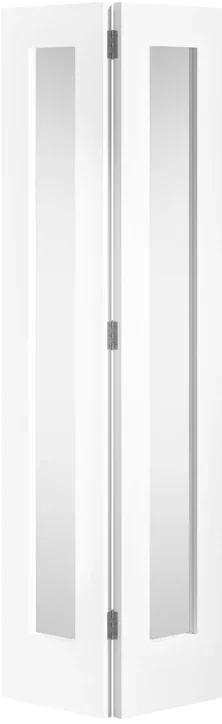
Home Centre Direct stocks internal doors across multiple styles, finishes, and sizes, with delivery across Northern Ireland and the Republic of Ireland. ROI deliveries are customs-free.
The Manhattan internal door range is designed to coordinate perfectly with the full Manhattan hardware collection, handles, hinges, escutcheons, and door bars, so every door in your home looks considered and complete.
Browse the full internal doors range at Home Centre Direct. View the Manhattan collection here.